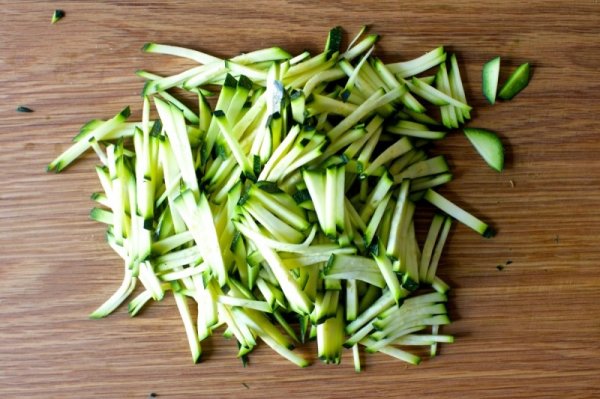
For cooks who lack formal knife training, julienning fruits and vegetables can feel like an unnecessary hurdle. The precise, uniform cutting required often leads to frustration, and specialized tools like julienne slicers or peelers come with their own limitations—one requires searching for a blade, the other only produces long, skinny strands. But a simple two-step knife method may eliminate the need for those gadgets altogether.
The technique, shared by a home cook who describes their knife skills as unremarkable, begins with any fruit or vegetable. First, slice it thinly on the diagonal.  Then, stack a handful of those slices at a time and slice them thinly again into matchsticks—cutting the long way for longer strips or the short way for shorter strips.

According to the cook, this approach is quick and easy, requiring no extra consideration during chopping. They note they no longer bother with a julienne slicer. The method works because it breaks down the precision task into two manageable steps: creating thin, flat slices first, then reducing those slices to uniform sticks.
Why This Method Works
Julienning typically demands consistent, thin cuts, which can be difficult for those without practice. By slicing on the diagonal, the cook creates broader surfaces that are easier to stack and hold steady. The second cut then transforms those slices into matchsticks without the need for a mandoline or specialized blade. The source does not specify whether the technique works equally well for all firmness levels of produce, but it is presented as applicable to any fruit or vegetable.
The cook also mentions two recipes that call for julienned ingredients: Quick Zucchini Saute and Sesame Soba. The method could make those dishes more accessible to home cooks who previously avoided them due to the cutting step.
This tip is part of a broader collection of cooking advice shared on the Smitten Kitchen site, which includes instructions for making baking powder, buttermilk substitute, brown sugar, and cake flour, as well as using a kitchen scale. The author acknowledges that such tips can be received in three ways: as a revelation, as an interesting but unnecessary alternative, or as common knowledge. They hope this julienning method falls into the first category for readers.



Editorial Notes