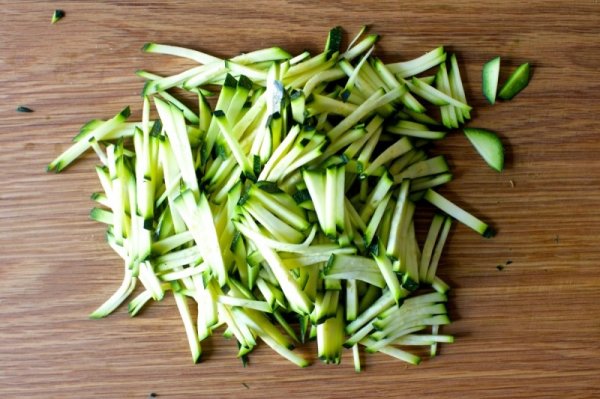
For many home cooks, the term "julienne" conjures images of culinary school precision and hours of practice. But a new approach, shared by a self-described cooking enthusiast with no formal training, suggests that perfect matchstick cuts are achievable with just a knife and a simple two-step process. The technique, which relies on diagonal slicing and stacking, promises to make julienning as easy as chopping.
The method begins with any fruit or vegetable. The first step is to slice it thinly on the diagonal. This angle creates longer, more manageable pieces. Then, instead of painstakingly cutting each slice individually, the cook stacks a handful of slices and cuts them thinly again—either lengthwise for longer strips or crosswise for shorter ones. The result is a pile of uniform matchsticks, ready for recipes like quick zucchini sauté or sesame soba.
This tip comes from the Smitten Kitchen blog, which recently reintroduced a collection of cooking tips that were previously tucked away in a side blog. The main site's redesign brings these tips back to the forefront, tagged clearly to distinguish them from recipes and announcements. The author notes that the tip is part of a broader effort to share practical kitchen wisdom, from making baking powder substitutes to using a kitchen scale.
Why This Method Works
The beauty of this technique lies in its simplicity. It requires no special equipment—just a sharp knife and a cutting board. The diagonal cut increases the surface area of each slice, making it easier to stack and cut into even strips. This approach also speeds up the process, as the cook no longer needs to handle each slice individually. For those who have struggled with julienne slicers or peelers, this method offers a straightforward alternative that can be done in seconds.
The author admits that the technique may not be groundbreaking for everyone. In fact, she humorously categorizes her tips into three responses: those who find it a revelation, those who are content with their current methods, and those who consider it common sense. Yet, for the many who find julienning a chore, this tip could be the solution they've been looking for.
Beyond the Knife Trick
This tip is part of a larger collection of kitchen hacks that the blog has compiled over the years. From making homemade baking powder to finding buttermilk substitutes, the author has long aimed to demystify common cooking challenges. The reintroduction of these tips on the main page ensures they are more accessible to readers who might have missed them before.
For those eager to try the method, the author suggests starting with a simple vegetable like a zucchini or carrot. The key is to keep the slices thin and even, and to stack them carefully to avoid slipping. With a little practice, the technique becomes second nature, and the need for specialized tools may disappear entirely.
While the author playfully debates whether her breakthrough is truly novel or just common sense, the practical value is clear: a faster, easier way to achieve professional-looking cuts without the fuss. As she puts it, "If you can slice a vegetable, you can julienne."



Comments
Sign in to leave a comment
No account? Create one
No comments yet.