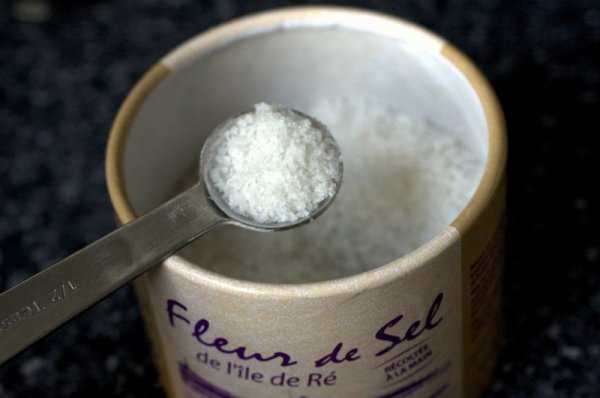
If your home-cooked meals frequently come out saltier than intended, the problem may not be your measuring skills but the brand of salt you use. A teaspoon of one kosher salt can weigh more than twice as much as another, dramatically affecting the final seasoning of a dish. This discrepancy, long known to professional chefs and test kitchens, is now being highlighted for home cooks who rely on volume measurements in recipes.
The issue stems from the varying crystal sizes and densities of different salt brands. For example, a teaspoon of standard table salt weighs about 6 grams, while a teaspoon of Diamond Crystal kosher salt weighs only 2.8 grams. Morton kosher salt falls in between at 4.8 grams per teaspoon, and David kosher salt matches table salt at 6 grams. These differences mean that if a recipe calls for a teaspoon of Diamond kosher salt and you use Morton, you could be adding nearly twice the saltiness.
The practical impact is significant. One teaspoon of table salt provides the same saltiness as 2⅛ teaspoons of Diamond kosher salt. Similarly, a teaspoon of Morton kosher salt is equivalent to 1¾ teaspoons of Diamond. This explains why a dish might taste like a salt lick even when you followed the recipe exactly—you likely used a denser salt than the recipe developer did.
How to Adjust for Different Salt Brands
Many recipe developers, especially those in test kitchens, favor Diamond kosher salt for its light, flaky crystals that are easy to pinch and distribute evenly. However, home cooks may not have this brand on hand. The good news is that you don't need to switch brands. Instead, you can adjust your measurements to match the salt's weight.
A simple rule of thumb is to assume the recipe developer used Diamond kosher salt. If you're using a different brand, start with half the amount called for, then taste and adjust. This approach prevents oversalting, as you can always add more salt later, but you cannot remove it once it's in the dish.
This advice is particularly useful for recipes that specify salt by volume, such as teaspoons or tablespoons, rather than by weight. While weighing ingredients is the most accurate method, many home cooks rely on volume measurements. Understanding the weight differences between salt brands can help you make more informed decisions in the kitchen.
The guidance, updated in 2021, reflects a broader trend in culinary education toward precision and understanding ingredient properties. By being aware of these variations, home cooks can achieve better results and avoid the frustration of an oversalted meal.






Comments
Sign in to leave a comment
No account? Create one
No comments yet.